Summary of Post:
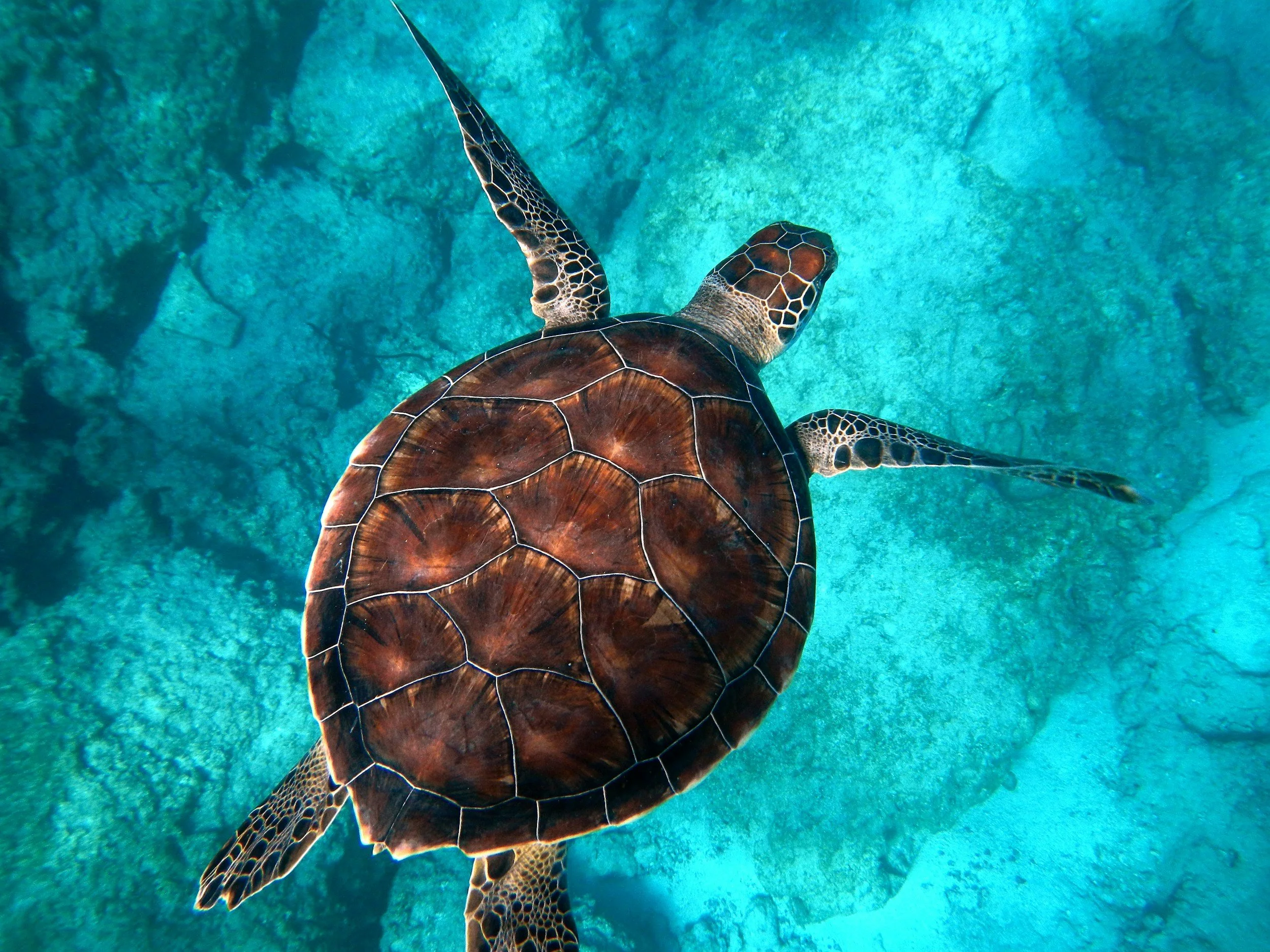
According to the article “Turtle travels: Researchers Uncover Different Migration Strategies Among Male Green Sea Turtles” authored by McKenzie Harris, Program manager of Editorial Content at the Florida State University's College of Arts and Sciences, male green sea turtles studied by researchers have revealed two variations of migration strategies, with the majority of the population choosing to travel an incredible distance to new foraging grounds after the breeding season. The research conducted provides insights into the lives of male sea turtles, who are generally understudied compared to their female counterparts. Understanding the migration tendencies of the males provides conservationists the opportunity to predict where the animals will appear and at what times of the year, and protect these areas to ensure both human and turtle safety.
To begin, the author argues that male green sea turtles have two distinct patterns of migration, which she elaborates on in a following paragraph.
Harris then cites a study conducted by researchers off the coast of Brazil to support her claims. The researchers discovered that some male sea turtles will travel up to 1,000 km when the breeding season concludes. This information could be used to predict the travel of male sea turtles in order to ensure their protection in whatever area they arrive.
To continue this discussion, Harris claims it is significantly more difficult to track the movement of male sea turtles than it is for females. Rather than presenting statistical evidence, the author emphasizes the idea that the frequent and predictable return of female sea turtles to nesting beaches is a well-known pattern in the scientific world. However, males, she argues, rarely return to land after leaving the beach as hatchlings. She uses this line of reasoning to emphasize the need for male migration research, and to support the impact of the research that has already been conducted.
Harris establishes her belief the FSU's Brazil turtle study will drive conservation efforts in turtle feeding and travel locations. She includes some detail about the study, and cites one of its co-authors, scientist Armando Barsante Santos. Santos explains that some of the sea turtles in his study migrated for nearly an entire month, and once again, asserts the usefulness of this information in conservation efforts.
At this point in the article, the author clarifies the two distinct migration patterns of male green sea turtles. She informs her audience of the study's finding that around 80% of the sea turtles chose to travel between 300 and 1,000 km in search of foraging grounds, while the other 20% remained in the breeding grounds for the duration of observation. For her reasoning, Harris quotes professor of oceanography Mariana Fuentes, who essentially repeats what the others stated earlier, arguing that the research will guide conservation efforts through matching and refining Brazil's protected marine areas to the migration patterns of the sea turtles.
Veering off the main topic slightly, Harris discusses how temperature affects sea turtle birth. According to her, the hotter the incubation of the eggs, the more likely a female sea turtle will be born. She reasons that with global temperatures rising, there has been an increase in birth rate of female sea turtles, putting the general sea turtle population out of balance. The author concludes the article with a quote from Santos, who emphasizes that knowing the amount of males required to make a turtle population “resilient” is crucial for conservation efforts worldwide.